Age-Worthy vs. Early-Drinking Wines: When is the Best Time to Pop the Cork?
Do we have the patience to wait? A deep dive into wine structure, the aging curve, and how time transforms your favorite bottles.
ALL ABOUT WINE
Cristina Etchego
4/4/20264 min read
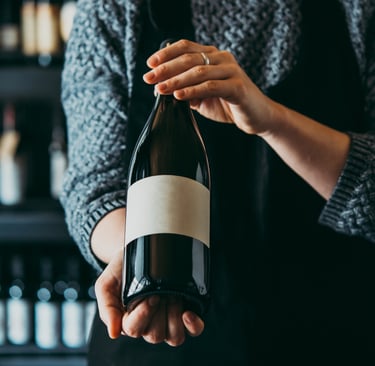
1. The Uncorking Dilemma: Today or Tomorrow?
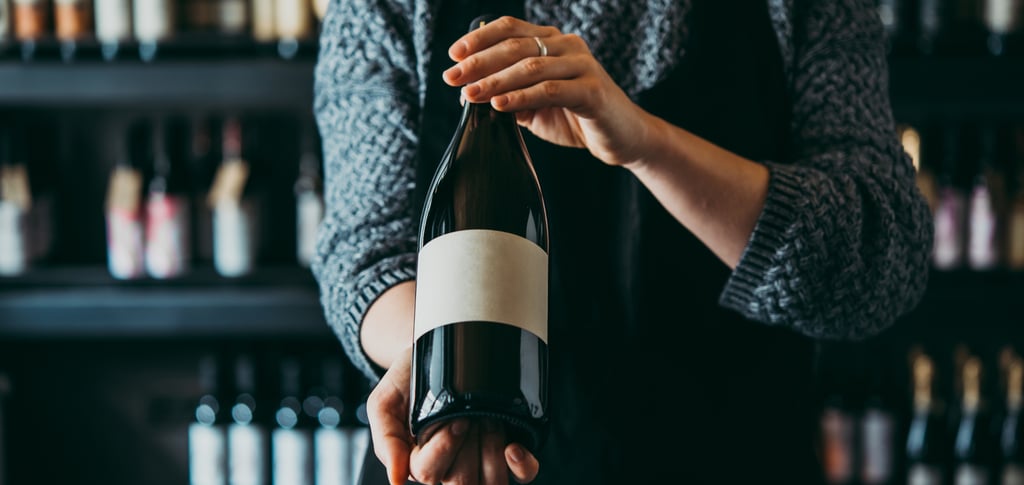
We’ve all been there: standing before that special bottle we’ve saved for a "worthy" occasion, wondering if this is truly its moment. Opening a wine is, in essence, an act of interruption. It is the halting of a living process that has been evolving in the silence of the cellar, only to bring it before the judgment of our palate.
As a sommelier, the question I hear most—and the hardest to answer—isn’t about food pairings, but about time: Should I open it now, or is it better to wait?
The answer isn't a specific date circled on a calendar; it’s what I call the "Drinking Curve". I like to imagine wine as a living organism with its own biography: it is born with exuberant, youthful energy, reaches a stage of full maturity, and finally, enters a period of natural rest.
Ultimately, it’s about choosing which stage of that wine’s life you want to meet today:
Are you looking for that youthful vibration, full of fresh fruit and energy?
Or do you prefer the wisdom of evolution, where the wine becomes more poised, elegant, and complex?
Identifying where your bottle sits on that "curve" is what transforms a simple gesture into an exciting experience. In the end, there are no mistakes—only moments waiting to be discovered.
Age-Worthy vs. Early-Drinking Wines:
When is the Best Time to Pop the Cork?
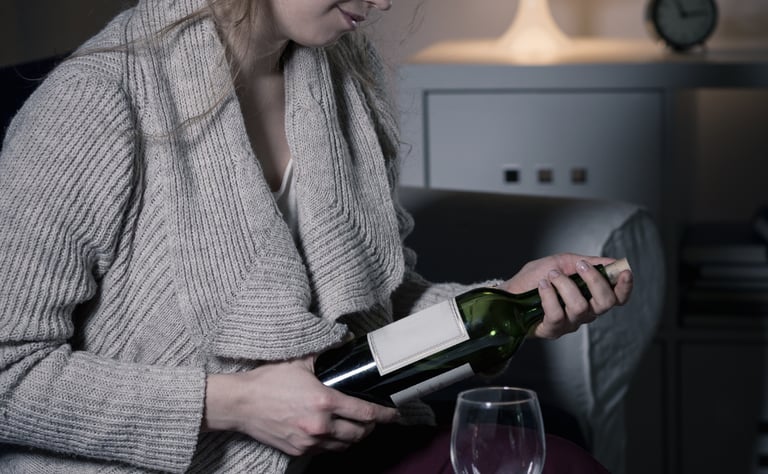

2. The Essence of an Age-Worthy Wine
We often assume that time, on its own, improves wine. In reality, time is only an ally to those bottles born with an impeccable internal architecture. Not every wine is built for the long haul, and learning to distinguish those that are is part of the magic of this world.
Throughout my career, I have learned to look beyond the label to understand a wine’s foundation. For a bottle to defy the calendar and evolve with grace, it requires three fundamental pillars that act as its vital essence:
Acidity as a "Defense System"
Acidity (specifically a low pH) is wine’s most powerful natural preservative. A low pH inhibits the growth of spoilage bacteria and allows SO2 (sulfites) to work more effectively. Furthermore, it protects the color (anthocyanins) and preserves freshness, preventing the wine from oxidizing or becoming "flabby" and flat.
Tannins as the "Self-Polishing Frame"
Tannins are polyphenols that act as antioxidants. Initially, they are small molecules that can feel aggressive on the gums (astringency). Over time, polymerization occurs: these molecules bind together to form longer, heavier chains that feel softer and rounder on the palate. If these chains become too long, the tannins precipitate (forming sediment), but the mouthfeel of the wine becomes "silky."
Fruit as the "Soul and Fuel"
This refers to the concentration of dry extract. A wine can have high acidity and firm tannins, but if it lacks a sufficient core of aromatic compounds and flavor precursors (fruit), it will eventually fade into a thin, acidic, and tannic liquid. Fruit is the fuel that allows tertiary aromas (leather, tobacco, forest floor) to emerge without the wine feeling hollow or "naked."
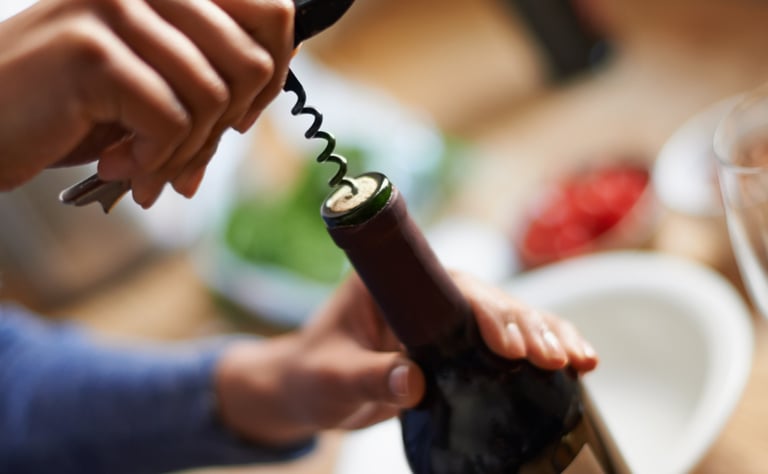
3. The "Dumb Phase" and the Wisdom of Tertiary Notes
Along this journey, wine often passes through a fascinating stage known as the "dumb phase." It is a period of introspection where the wine seems to withdraw into itself, tempering its youthful impetuosity before blooming once again. This is a necessary silence—a deep slumber where the structure finally settles.
After this dormancy, the wisdom of tertiary aromas emerges. Fresh fruit gives way to notes of forest floor, truffle, fine leather, and sweet spices. The texture turns to silk, thanks to the polymerization of tannins. Identifying this rebirth is what defines excellence in service: understanding that the wine is not dead, but has been sleeping, only to wake up with a much more complex story to tell.
Yet, no technical rule is absolute when compared to a shared experience. In the end, analytical knowledge provides us with criteria, but life passes the final sentence. As Luis Gutiérrez says:
"The best time to reach for a corkscrew is when you have the right company. An age-worthy wine opened in solitude is but half a story."
Read more posts


A Variety Reclaimed
Non-Alcoholic Wine
The Trend Reshaping the Market
PIWI wines
why they are leading the future of sustainable, pure viticulture now.
Godello grape


Mencia Grape
Origin, Characteristics & Food Pairings
Your comment here
Contact
Inquiries & Consultations — Get in touch here
© 2026. All rights reserved.
Descubre mis libros en Español